Ions, Ions Everywhere!
Preamble: Okay Schizz, so we're going to be talking about ionic substances, what they are and how to make them. In a lame attempt to make you excited about ions, let me tell you a little something...Despite the text's constant references to table salt as if it were the only ionic substance, there other ones that you know and love.
Rocks are often make of ionic bonds and they make up the majority of the stuff on earth. Ionic substances are in your bathroom cupboard (toothpaste) and in your kitchen cupboard (baking soda, baking powder, cream of tartar), and they are inside you.
Plus you wouldn't be alive without ions - Ion channels in your nerves allow you to sense the outside world. Ions tell your muscles to contract (especially the calcium ion). Also, as I'm sure you'll see, they form a major component of certain heavy weapons found in video games. Tee hee.
1. Read Chapter 4.
2. Complete the following chapter questions:
3, 7, 15, 17, 21, 27, 29, 31, 33, 35, 37, 43, 49, 51, 53, 55, 61.
4, 4, 4, 4, 4, 4, 4, 4, 4, 4, 4, 4, 4, 4, 4, 4, 4.
3. (1) Why are valence electrons the most important electrons in chemical reactions?
4. (2) Would you expect a "stable" compound to have the highest or lowest amount of energy contained within its electrons? Why?
5. (2) Why do you think that ions that have lost or gained more than three electrons are seldom encountered?
6. (4) Would you be likely to encounter an ion of F+? Mg+? Why or why not?
7. (2) Why is "formula unit" a better term than "molecule" when talking about ionic substances?
8. (3) Investigate the effects on humans of ingesting both sodium and chlorine. Why do you think its okay to eat table salt which has the chemical formula NaCl?
9. (5) Look at the following video and report on which ions produced which coloured flames. Based on the charge of each of the ions, give a possible ion or polyatomic ion from which it could have been paired. Eg Al3+ could have been paired with a P3- or 3 Cl- to make an ionic solid.
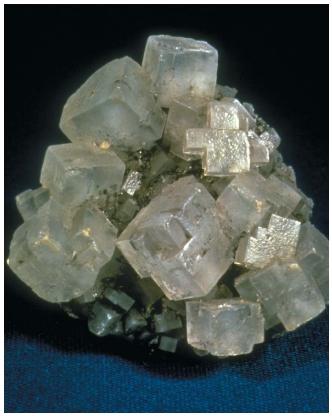
10. (2) Look at the following images of salt crystals:
Haz clic aqui
Haz clic aqui tambien
What do you notice about the shape of the crystals? How do you think this shape mirrors the atomic arrangement of table salt?
11. (2) Some mouthwashes and toothpastes contain sodium fluoride. Since they need to deliver only fluoride to the teeth, why do they include the sodium?
12. (4) Looking at Table 4.3, can you notice some general trends with how compounds are named? Hint: consider the "ate" ending as the "normal" or more usual ion. Note: it's important to know these trends.
Bonus
Based on your new knowledge of ions and ionic substances, propose a hypothesis as to how this ion cannon weapon would work:
Chapter Questions 68 Marks
Assignment Questions 27 Marks
Total Marks 95 Marks


Subscribe to:
Post Comments (Atom)
No comments:
Post a Comment